
If you read Part 1 of this series, you already know that understanding your design style isn't about following rules — it's about making better decisions during your Seattle home remodel.
We covered transitional, coastal, and organic modern design in Part 1. Now, in Part 2, we're exploring three more styles that show up often in Northeast Seattle homes: mid-century modern, minimalism, and Scandinavian design. Each one brings something different to a space — a different mood, a different rhythm, a completely different way of living.
Keep reading and notice what design style pulls you in. Our biggest piece of advice? Trust your instinct!
Design Styles in this Post:
Mid-Century Modern Design Style
Minimalist Design Style
Scandinavian Design Style
Mid-Century Modern Design Style
Timeless Shapes. Real Warmth. Just Enough Cool.
Mid-century modern has a reputation for being effortlessly stylish, and honestly? We think it earns it.
The look is structured without being stiff, warm without being heavy, and just interesting enough to make a room feel like someone with taste lives there. It's the design equivalent of a person who shows up to a dinner party in a great blazer and already knows everyone's name.
In Seattle remodels, mid-century modern works especially well in living rooms, and primary suites — anywhere you want personality blended into the bones of the space.
You'll often see:
- Warm woods and rich tonal contrast
- Sculptural lighting that doubles as art
- Streamlined furniture with strong silhouettes
- Vintage-inspired pieces grounded by modern accents
- Graphic moments softened by texture
Curated Picks for a Mid-Century Modern Living Room
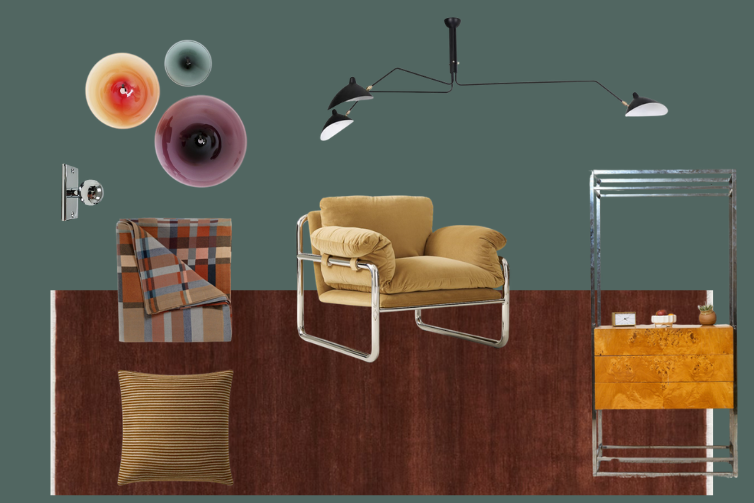
Living rooms are a natural home for mid-century modern. The style has enough structure to feel intentional, enough warmth to feel lived-in, and enough personality to make the room actually interesting to be in.
For this space, Lead Interior Designer Sara Bone pulled together pieces that do exactly that:
- A Serge Mouille three-arm ceiling lamp sets the tone immediately — sculptural overhead lighting is one of the fastest ways to signal mid-century influence
- An Agra rug in Burnt Umber grounds the seating area and introduces that warm, earthy depth the style does so well
- Polished chrome hardware adds a crisp, modern counterpoint that keeps things from skewing too retro
- A doublecloth blanket and mustard-toned pillow bring in texture and the easy, layered comfort every living room actually needs
- The Desmond Chair and a Milo Baughman burlwood vintage shelf (vintage find!) reinforce the mid-century influence through shape, material, and real craftsmanship
- A sculptural wall piece by SkLO adds an artful moment without tipping the room into clutter
Also see: Your Guide to the 6 Top Seattle Kitchen Design Styles
Minimalist Design Style
Quiet, Considered, and More Livable Than You Think
Minimalism gets unfairly criticized.
People hear "minimalist" and picture a cold white room with one sad plant in the corner and nowhere to put their keys. That's not minimalism, that's just an unfinished room.
True minimalist design is about clarity and intention. Every piece earns its place. The forms are quiet but confident. And when it's done well, a minimalist space doesn't feel empty — it feels settled. Calm in a way that's genuinely hard to achieve.
For Seattle homeowners planning a home renovation, minimalism works beautifully in family rooms, primary bedrooms, and home offices — spaces where you want to decompress, not decode.
You'll often see:
- Restrained palettes that let texture do the heavy lifting
- Simple, architectural forms
- Natural materials used thoughtfully — linen, jute, oak, stone
- Intentional negative space (yes, it counts as a design element)
- A strong focus on scale and proportion
Curated Picks for a Minimalist Family Room
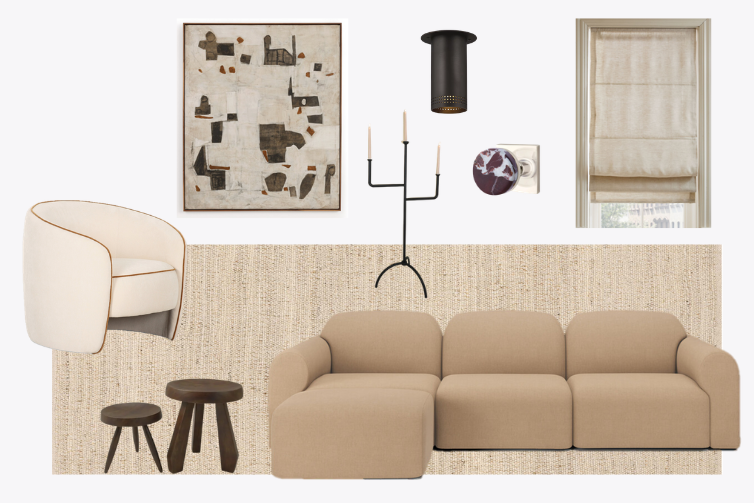
Family rooms have a tough job. They need to handle movie nights, homework sessions, weekend mornings, and everything in between — while still feeling like a space you actually want to be in.
Minimalism handles this well, as long as the room is layered with intention instead of just stripped down.
For this space, Sara selected:
- A compact architectural ceiling light that keeps the overhead look clean without disappearing entirely
- A jute-blend rug that introduces softness and texture without adding visual noise
- A marble-accented knob — because even the small details matter in a minimalist room, and this one earns its keep
- A linen Roman shade and a tactile accent art piece that add depth while staying true to the palette
- The Bulky modular sofa set, the In the Groove lounge chair, and a streamlined stool set that keep the room open, functional, and easy to actually move through
- A sculptural candelabra with just enough shape and presence to make the room feel finished
Scandinavian Design Style
Practical Meets Beautiful. Cozy Without Trying.
Scandinavian design is beloved for a reason: it figured out how to make the practical feel beautiful, and it never got precious about it.
The lines are simple. The palette stays light. The materials carry the personality. And the whole effect is soft, functional, and refreshingly unfussy — which, if you've ever lived through a Seattle remodel, sounds like exactly what you want on the other side of it.
In Northeast Seattle homes, this style shows up often in home offices, kitchens, and bedrooms. It works especially well in spaces where you need clarity and comfort to coexist.
You'll often see:
- Pale woods and soft, warm neutrals
- Functional furniture with refined, approachable shapes
- Gentle contrast — nothing jarring, nothing too matchy
- Cozy but minimal layering (hygge without the clichés)
- Pieces that feel useful, beautiful, and genuinely easy to live with
Curated Picks for a Scandinavian Office
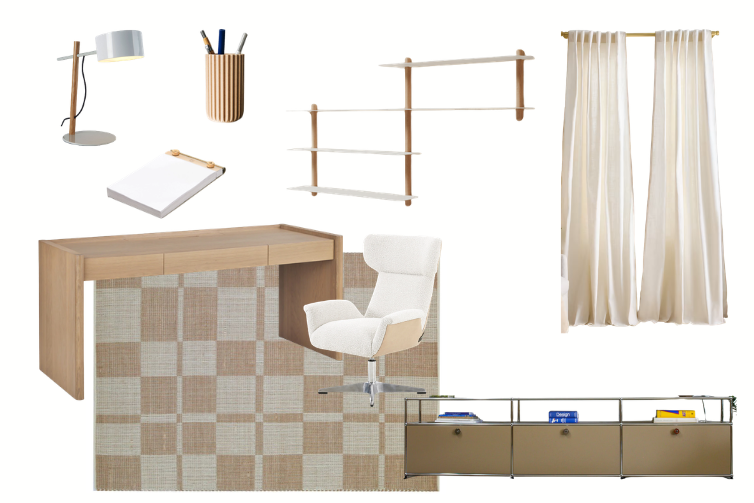
Home offices are a natural fit for Scandinavian design. The style supports focus and ease without making a workspace feel corporate or cold — two things no one has ever listed as their design goals.
For this office, Sara chose:
- A streamlined desk lamp offers focused task lighting with a clean visual profile that doesn't compete with anything else in the room
- A neutral Riimi rug softens the space and helps define the work zone without creating visual weight
- Light oak shelving adds storage while keeping the room airy and open
- A piped-edge cotton curtain adds softness and subtle detail — the kind of finish that makes a room feel complete rather than just furnished
- A white oak desk, a tailored office chair, and a streamlined media console balance function with warmth
- A pen-holder vase and desk pad keep things organized while honoring Scandinavian design's love of thoughtful everyday utility
Finding Your Direction
If you’re drawn to elements from more than one style, that’s completely normal. Most homes, especially during a remodel, are a blend.
The goal isn’t to fit into a category. It’s to understand what feels right for how you live.
Our kitchen design style quiz helps you:
- Clarify your layout preferences
- Identify materials and finishes you’re naturally drawn to
- Avoid costly design indecision during your renovation
- Move forward with confidence
If you're planning a remodel and want guidance from a trusted Northeast Seattle interior designer, this is a smart place to begin.
Take the Kitchen Design Style Quiz and discover the direction that fits your home best.
Recent Articles
by Hannah Morris